Shaw University is the OLDEST HBCU in the South!
History and Mission
History of Shaw University
Shaw University, located in Raleigh, North Carolina is the first historically Black institution of higher education in the South and among the oldest in the nation. The University was founded in 1865 by Henry Martin Tupper, a native of Monson, Massachusetts, a soldier in the Union Army during the Civil War, and a graduate of Amherst College and Newton Theological Seminary.
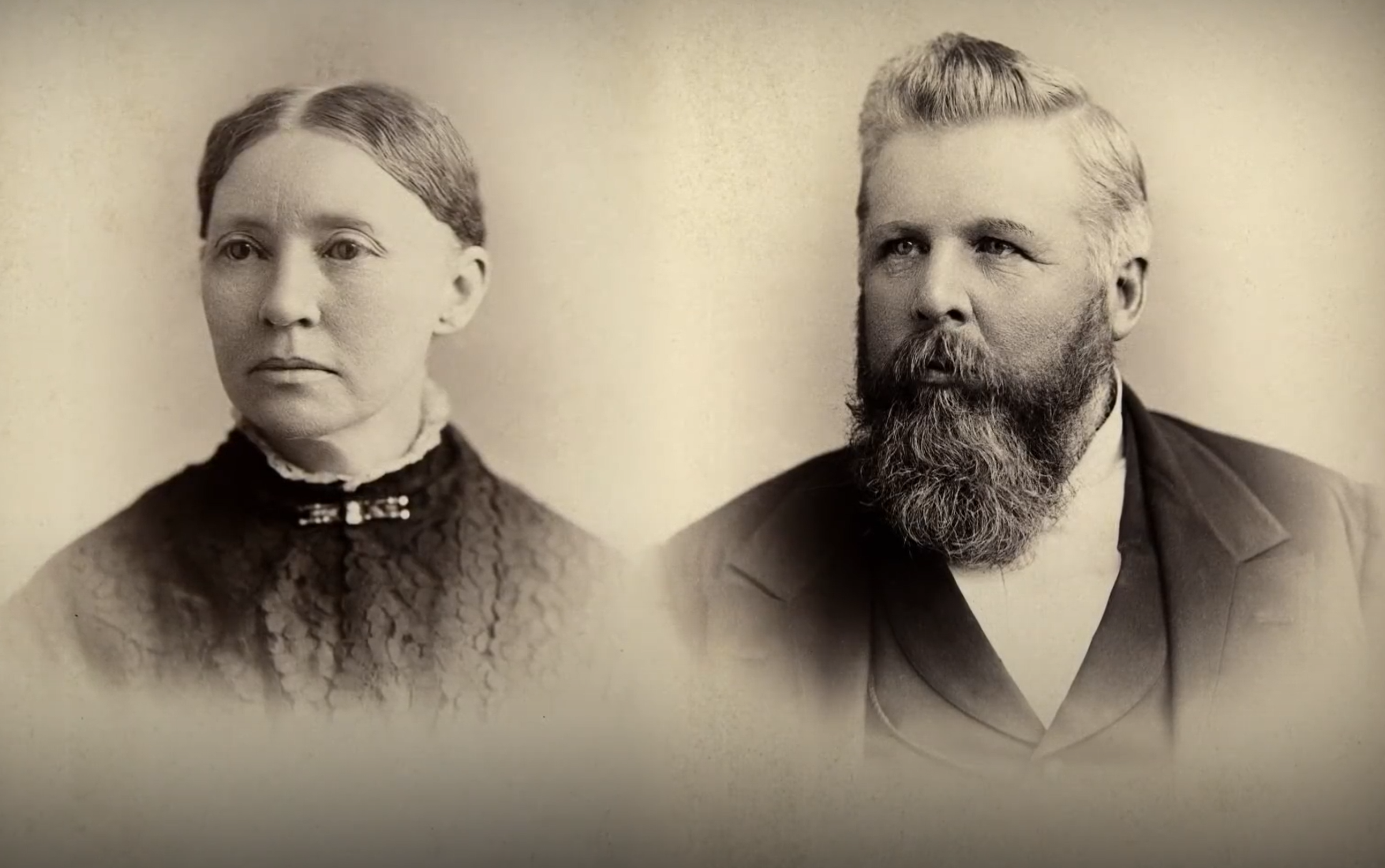
Shaw was originally founded as Raleigh Institute, a school designed to teach freedman theology and biblical interpretation. The school’s name changed to Shaw Collegiate Institute in 1870 and five years later it adopted its present name, Shaw University. The college offered its first post-secondary instruction in 1874, and the first baccalaureate degree was awarded in 1878.
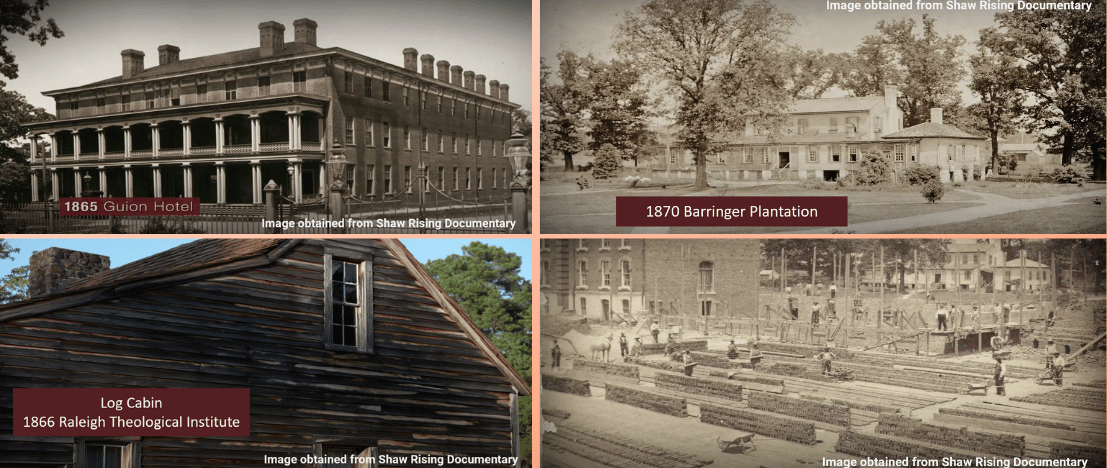
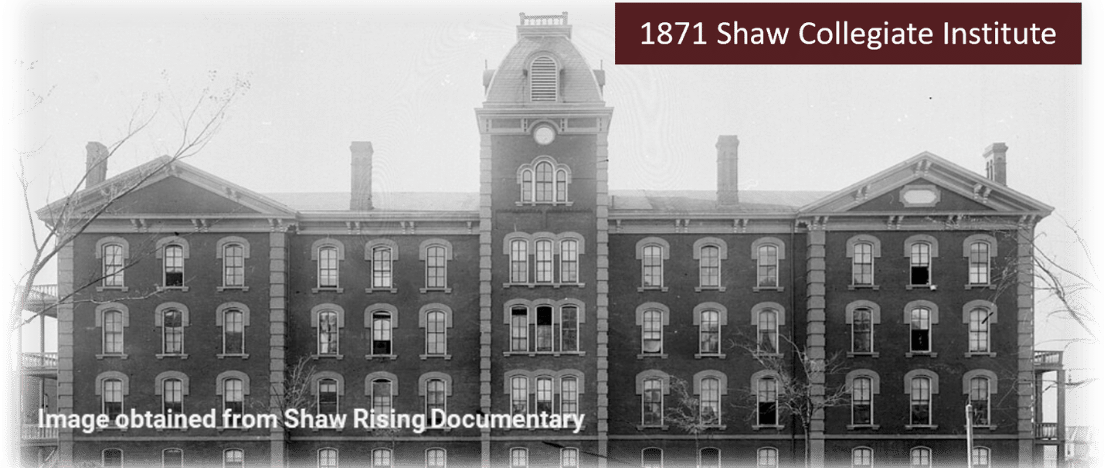
Shaw has been the site of many notable achievements in African American history. It is credited as having the first four-year medical school for African Americans in the nation, Leonard Medical School, which operated from 1882 to 1914, as well as the first university to build a female dormitory on a coeducational campus, built in 1873. In addition, the Student Nonviolent Coordinating Committee (SNCC) was established after a conference which was held on Shaw’s campus in 1960.
Some of Shaw's outstanding professionals
Shaw University has produced outstanding professionals who have contributed to the advancement of society. Shaw graduates include several college presidents, a number of academic vice presidents, judges, lawyers, recording artists, school principals, pastors, teachers of the year, a president of the United Nations General Assembly, and other notable persons, such as:
-
Ella Baker (1927), civil rights activist & co-founder of the Student Nonviolent Coordinating Committee (SNCC)
-
Dr. C.T. Vivian (1972), became the director of Seminary Without Walls at Shaw University Divinity School in Raleigh, North Carolina, Dean of Divinity at Shaw University Seminary, and recipient of the Presidential Medal of Freedom Award
-
Willie E. Gary (1971), multi-millionaire attorney, motivational speaker, businessman
-
James “Bonecrusher” Smith (1975), 1st heavyweight boxing champion to earn a college degree
-
Shirley Caesar (1984), Grammy Award-Winning Gospel singer
-
Shawn “CoCo” McMillan (1995), 2010 Stellar Award Winner
-
Gladys Knight (1966), Singer, Gladys Knight & the Pips, member of the Rock and Roll Hall of Fame, received Honorary Doctorate
-
Van Green (1973), NFL Player
-
Lee Johnson (1975), President & CEO of Mechanics & Farmers Bank
-
Ronald "Flip" Murray (2002), Professional basketball player
-
Ida Van Smith (1939), One of the first African American female pilots and flight instructors in the United States
-
Angie Brooks (1950), The only African female President of the United Nations General Assembly. She was also the second woman from any nation to head the United Nations
-
Adam Clayton Powell, Jr., D.D. (1934), Congressman from New York, 1945–71
-
James E. Cheek (1955), Former President of Shaw University, President Emeritus of Howard University, 1983 recipient of the Presidential Medal of Freedom
-
Luther Jordan (1997), Former member of the North Carolina Senate from 1993 to 2002
-
Sheila P Moses (1983), Best selling author, nominated for the National Book Award & NAACP Image Award
-
William L Pollard (1967), President of the Medgar Evers College (2009–2013)
-
James E. Shepard (1894), Founder and President of North Carolina Central University
-
Edawn Coughman (2010), Offensive Lineman and OT for the Buffalo Bills
Shaw boasts many “firsts”
Shaw boasts many “firsts”:
-
First HBCU in the South – Shaw was the first historically Black institution of higher education in the American South, founded by Henry Martin Tupper and the American Baptist Home Missionary Society
-
First HBCU to Open to Women – In 1873, Shaw opened Estey Hall, the nation’s first college building with dormitories and classrooms open to African-American women
-
First College in the Nation to Offer a Four-Year Medical Program – The Leonard Medical School began in 1881, training African-American doctors
-
First HBCU to Train Black Pharmacists – The Leonard School of Pharmacy opened in 1882, pioneering pharmacy education for Black students in the U.S.
-
First Legal-Studies Program for African Americans – The Shaw University Law School opened in 1888, offering the first legal education for African Americans
-
First Black College to Own a Radio Station – WSHA went on the air in 1968, making Shaw the first Black college to have its own radio station
-
First HBCU in NC to Earn an “A” Rating for Teacher Training – Shaw was North Carolina’s first HBCU to receive this distinction from the State Department of Public Instruction
-
Home of the Student Nonviolent Coordinating Committee (SNCC) – The SNCC was founded in 1960 after a meeting on Shaw’s campus, organized by alumna Ella Baker
-
Founder of North Carolina Central University and the first presidents of Elizabeth City State and North Carolina A&T Universities were all Shaw graduates.
-
Third president of Fayetteville State University was also a Shaw graduate.
Dr. Paulette R. Dillard, Ph.D., currently serves as the University’s President. Click to view more information about Dr. Dillard.
Legacy and Impact
Shaw’s “firsts” reflect its role as a leader in expanding educational opportunities for African Americans during a time of systemic exclusion. Its programs in medicine, law, pharmacy, and teacher training helped produce generations of professionals who served their communities and advanced civil rights.

Mission
The Greater Atlanta Alumni Chapter brings Shaw University graduates together from Metro Atlanta and across Georgia through events, service, and community engagement. We strengthen connections, celebrate our legacy, and support the next generation of Shaw Bears.
Quick Links
Donate via PayPal
Click the Donate button below to contribute local dues ($50), registration/event fees, or make a general donation via PayPal to the Greater Atlanta Alumni Chapter. Please include your name and the purpose of your payment in the note section. If paying through PayPal, please remit $52.50 to cover a $2.50 processing fee.


